
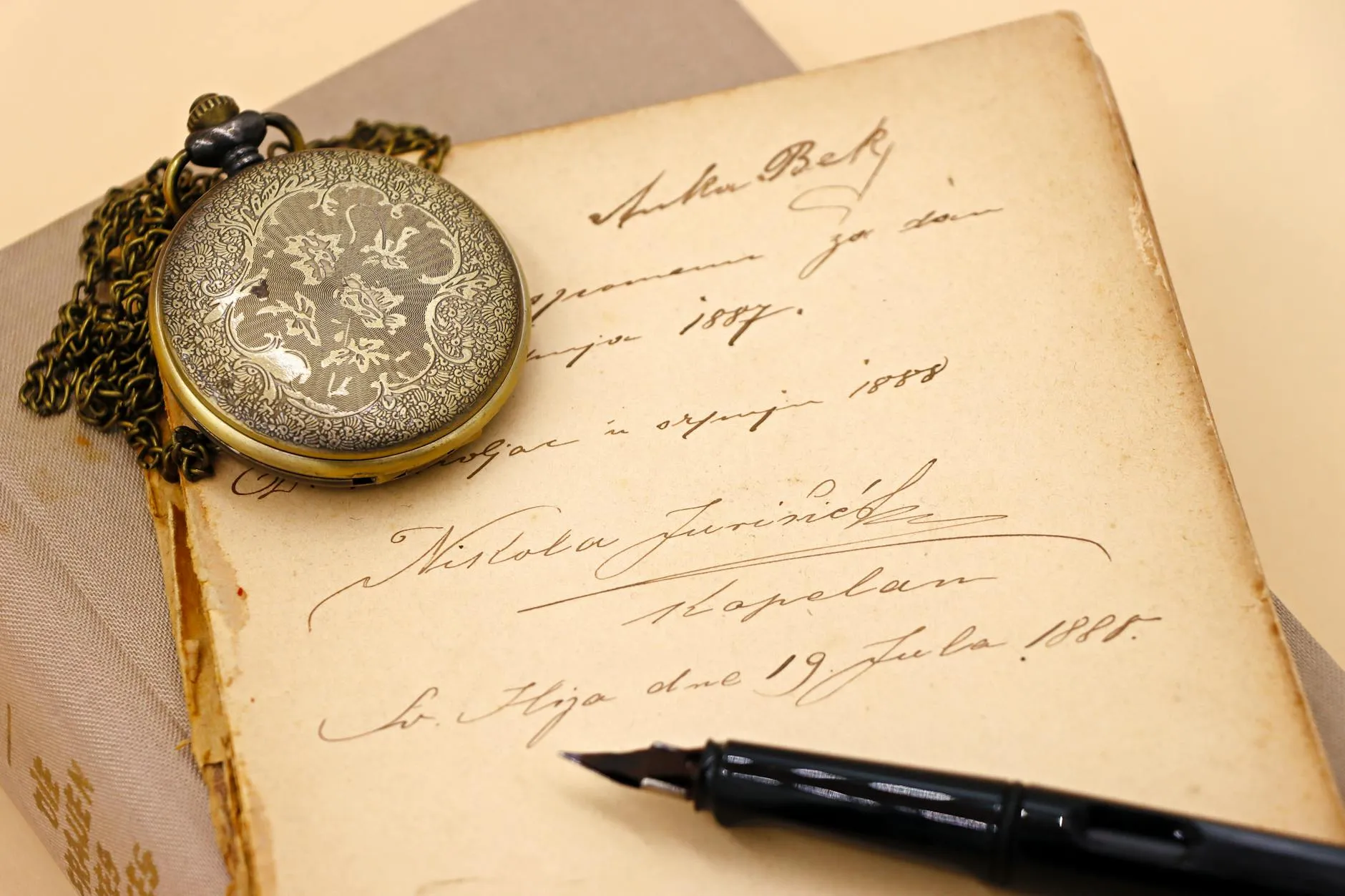
A grieving widow. Three adult children. A Marin County estate filled with decades of Hollywood memorabilia, personal treasures, and a lifetime of whimsy. What began as a family united in loss became a cautionary tale for every practitioner who has watched an estate fracture over items that never appeared on a balance sheet. This is what we get wrong about “personal property of nominal value,” and why it may be time to reconsider our approach.
Here is a phenomenon that any seasoned estate attorney will recognize: the moment when a family, having navigated the distribution of a seven-figure investment portfolio with admirable composure, descends into bitter acrimony over a wristwatch.
It is not the watch itself, of course. It is never really about the watch. The watch is merely the vessel into which decades of unspoken family dynamics have been poured. The estate plan, with its carefully drafted provisions for real property and financial assets, has left no container for any of it.
The Williams estate dispute of 2014-2015 offers us a particularly instructive specimen of this phenomenon. Not because celebrity estates are inherently more contentious (though they do tend to be observed more closely), but because the failure points were so remarkably ordinary. The trust was sophisticated. The prenuptial agreement was in place. The major assets were properly funded. And yet, within four months of Robin Williams’ death, his widow and his three adult children were in San Francisco Superior Court, arguing over approximately 300 items that included a wedding tuxedo, a honeymoon bicycle, and a collection of toy soldiers.
The case file makes for sobering reading.
I. The Anatomy of an Ordinary Disaster
Robin Williams executed his trust on June 24, 2010, with a crucial amendment following his marriage to Susan Schneider in January 2012. The structure was sensible enough: Susan would receive a life estate in their Tiburon home “and the contents thereof,” while his three children from prior marriages (Zachary, Zelda, and Cody) would inherit the Napa Valley estate and specific categories of personal property.
The relevant language appeared in Paragraph 4.3.1.1(b), which bequeathed to the children “all of Settlor’s clothing, jewelry, personal photos taken prior to his marriage to SUSAN, Settlor’s memorabilia and awards in the entertainment industry and the tangible personal property located at 1100 Wall Road, Napa.”
One can almost hear the drafting attorney’s pen moving with confidence. Memorabilia and awards: that covers the Oscar and the Golden Globes. Clothing and jewelry: straightforward enough. Contents of the Tiburon residence to the surviving spouse, with appropriate carve-outs.
The difficulty, as practitioners will immediately recognize, is that Robin Williams was not an ordinary collector. His personal property included more than 85 watches, upwards of 50 bicycles, thousands of toy soldiers (a passion dating to childhood, when he arranged them by historical period across the entire third floor of his family home), Japanese anime figurines, antique weapons, fossils, theater masks, and memorabilia from a career spanning four decades.
And the trust never defined memorabilia. Or jewelry. Or contents. Or collectibles.
Susan’s December 2014 petition argued that “memorabilia” should mean items “depicting him or relating to his fame” in connection with his acting career, a reasonable interpretation supported by dictionary definitions. The children’s attorneys countered that memorabilia should encompass “all items he collected over the years (such as toys, bikes, games, trinkets and the like) and those things for which Robin is/was memorable.”
Both readings were defensible. Neither was obviously correct. And therein lies the problem.
II. The Items That Fractured a Family
The complete inventory of disputed property ran to approximately 1,200 items before mediation narrowed the active disputes to roughly 300. The categories are worth examining, not for their celebrity provenance, but for their familiarity to anyone who has administered a complex estate.
The wedding tuxedo became an early flashpoint. Susan sought to retain the suit Williams wore at their October 2011 wedding. The children claimed it as “clothing” bequeathed under the trust. A reasonable observer might wonder how a garment worn once, on a specific ceremonial occasion, during a marriage, could be classified as anything other than marital property. A reasonable observer has not spent sufficient time in probate court.
The watch collection presented valuation and classification challenges in equal measure. Williams’ 85-plus timepieces ranged from an IWC Double Chronograph (his daily wear in his final years) to a Franck Muller Imperial Tourbillon valued at $25,000-$35,000. Susan’s position (that watches should be excluded from “jewelry” as utilitarian items) found support in some case law. The children’s position (that a collection of this magnitude clearly constituted jewelry) found support in common sense. The trust offered no guidance.
The honeymoon bicycle illustrated how location-based distributions fail when applied to movable property. The trust distinguished between “contents” of Tiburon and items “located at” the Napa estate. A bicycle purchased by the couple during their honeymoon fit neither category cleanly.
The toy soldiers presented perhaps the most poignant classification problem. These were not merely collectibles; they were artifacts of Williams’ childhood, carefully maintained and expanded over sixty years. Were they “memorabilia” in the sense that they memorialized his life? Were they “contents” of whatever residence happened to house them? The trust, again, offered no answer.
Susan Schneider Williams later described receiving a phone call, two and a half weeks after her husband’s death, informing her that she “might not be able to keep our wedding gifts” and that trustees needed to “come in and take everything out.” Her response, as recorded in court filings, captures the human dimension of definitional failure: “If we’re talking that you guys think everything is memorabilia, then take me. He’s touched me. Where does this end?”
It is a fair question. The trust did not answer it.
III. What the Litigation Consumed
The matter proceeded in San Francisco Superior Court under Case Number PTR-14-298367. Susan filed her petition on December 19, 2014. The children filed their opposition on January 21, 2015. Judge Andrew Cheng first heard the matter on March 30, 2015. Settlement was not reached until September 25, 2015, more than thirteen months after Williams’ death.
The filings make difficult reading. Susan’s petition alleged she “became frightened of the co-trustees invading her home.” The children’s opposition characterized her claims as “a blatant attempt to alter the disposition of assets Mr. Williams specifically planned and provided for,” accusing her of “adding insult to a terrible injury.” Their spokesman stated publicly: “Robin’s children want nothing more than to be left alone to grieve.”
Both sides, one suspects, were telling the truth as they understood it. The trust’s ambiguity had created a situation in which reasonable people, operating in good faith, could reach diametrically opposed conclusions about the decedent’s intent. Litigation was not a failure of character; it was a failure of documentation.
The settlement, when it came, gave Susan the wedding gifts, selected clothing items, one frequently-worn watch, and the honeymoon bicycle. The children received the overwhelming majority of disputed property: more than 50 bicycles, over 85 watches, all entertainment awards and memorabilia, the Napa estate, and thousands of items that were never seriously contested.
Susan’s post-settlement statement captured the exhaustion of the process: “While it was painful to have truckloads of his belongings removed from our home–it’s the few sentimental items I get to hold onto that mean everything to me.”
Truckloads. Thirteen months. For items that, in the context of a $100 million estate, represented a rounding error in monetary terms and an incalculable cost in family cohesion.
IV. The Practitioner’s Mirror
Here is where the case study becomes uncomfortable for estate planning professionals.
The Williams estate plan was not poorly drafted by the standards of its time. The trust successfully avoided probate on major assets. The prenuptial agreement established appropriate boundaries for a third marriage. The pour-over will functioned as intended. Williams had clearly given thought to his estate; his two prior divorces, which cost him an estimated $30 million, had presumably impressed upon him the importance of planning.
And yet.
The undefined terms (memorabilia, jewelry, contents, collectibles) created litigation that could have been avoided with a single exhibit: a comprehensive inventory, maintained during the settlor’s lifetime, specifying which items belonged to which category and which beneficiary.
Estate planning attorney John Goralka, analyzing the case, observed: “In 27 years of administering trusts for our clients, we have seen that conflicts can arise even over the lower value personal property if the distribution terms are not carefully detailed… You must be careful to define all terms.”
William Zabel, founding partner of Schulte Roth & Zabel, offered a more candid assessment to the New York Times: “I’ve sent three sons to very expensive Ivy League schools thanks to the dysfunctional nature of estate planning for families with stepchildren.”
One appreciates the honesty, if not the implication.
The question for practitioners is not whether the Williams dispute was foreseeable (it manifestly was) but whether current intake processes would identify similar risks in existing client files. Consider:
How many of your clients with significant collections have provided detailed inventories specifying beneficiary assignments for individual items? How many trust instruments in your files rely on categorical language (personal effects, household contents, tangible personal property) without defining those terms? How many blended family plans distinguish between “contents” of one residence and “items located at” another, without accounting for property that moves between locations?
The Williams case is instructive precisely because its failures were so ordinary.
V. The Documentation Gap
The core problem in the Williams dispute was not legal complexity; it was informational poverty. At the moment of death, there existed no authoritative record of what Robin Williams owned, how he categorized it, or to whom he intended each significant item to pass.
The trustees were left to reconstruct intent from categorical language. The beneficiaries were left to advocate for interpretations that favored their interests. The court was left to mediate a dispute that never should have reached its docket.
This is, fundamentally, a documentation problem. And documentation problems have documentation solutions.
The three pillars of defensible distribution are not conceptually difficult:
Comprehensive cataloging. If an item is not documented, it exists only in memory. Memory is contested territory in probate proceedings. Photographic evidence, acquisition records, and provenance documentation transform subjective recollection into objective fact.
Contemporaneous valuation. Appraisals conducted during the settlor’s lifetime establish baseline values that cannot be disputed post-mortem. For collections that appreciate or depreciate, periodic revaluation creates an audit trail that supports equitable distribution.
Transparent methodology. Equitable does not mean equal; it means explicable. When beneficiaries can see why a distribution was calculated as it was, when the methodology is documented and the inputs are verifiable, disputes shift from fundamental disagreements about fairness to technical disagreements about implementation. The latter are far easier to resolve.
The difficulty, of course, is implementation. Spreadsheets degrade. Handwritten lists go missing. Photographs without metadata lose their evidentiary value. And even the most diligent attorney cannot maintain, for every client, the kind of living inventory that complex estates require.
VI. A Purpose-Built Approach
This is the problem that Title Allocate was designed to address.
The platform emerged from a recognition that tangible personal property, the category most likely to generate family conflict, receives the least systematic attention in most estate plans. Attorneys build sophisticated structures for financial assets, real property, and business interests. Collections of significant monetary and sentimental value are left to categorical language and good intentions.
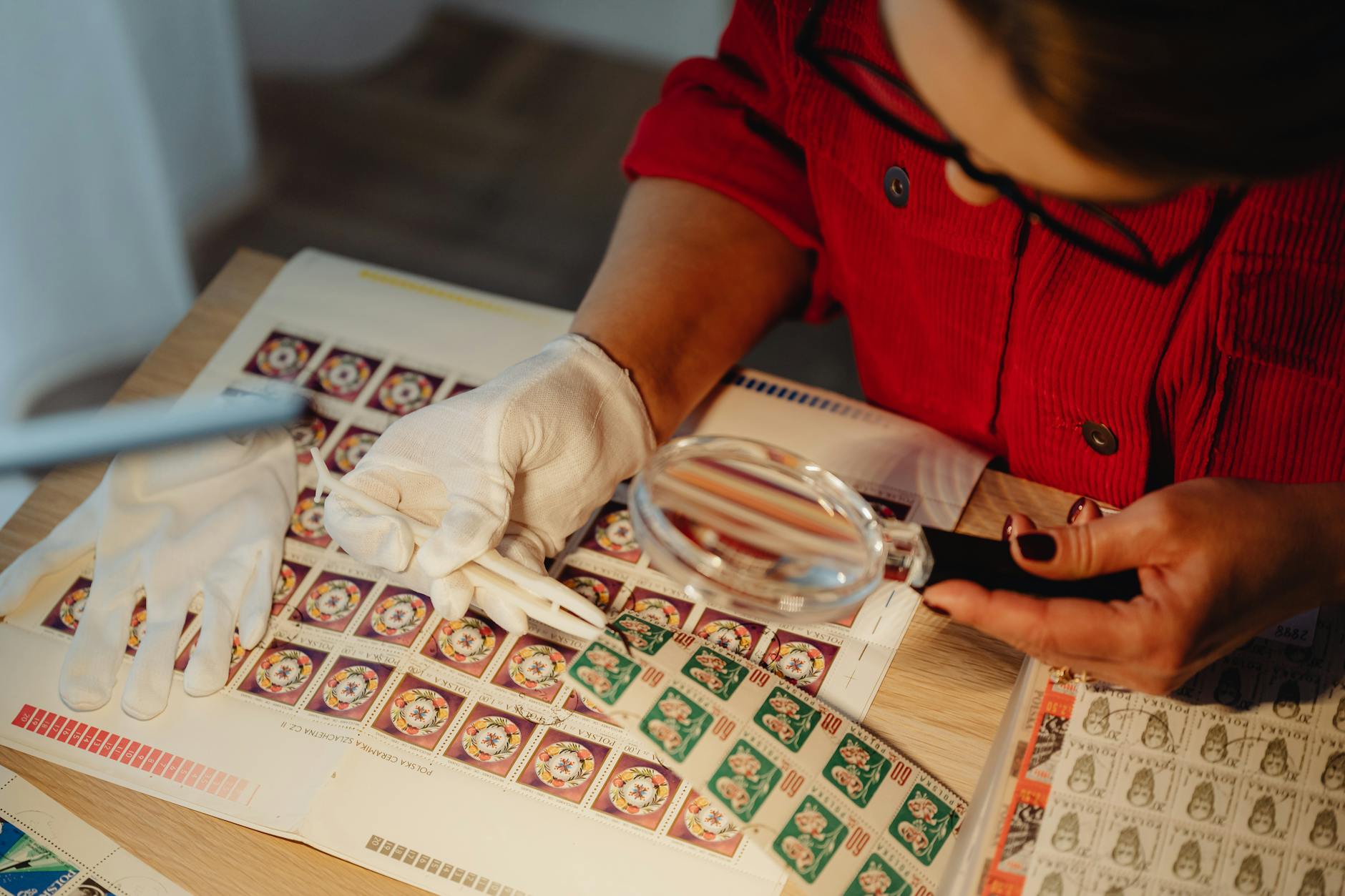
Title Allocate provides the infrastructure that the Williams estate lacked:
Structured cataloging with auditable classification. Items are photographed, described, and categorized within a system that maintains classification rationale. When a watch is designated as “jewelry” or excluded from that category, the reasoning is documented. When an item is characterized as “memorabilia” or “household contents,” the basis for that characterization is preserved. The definitional disputes that consumed thirteen months of litigation in the Williams matter become resolvable questions of fact rather than interminable questions of interpretation.
Integrated access to credentialed appraisers. Title Allocate’s network includes specialists across art, collectibles, jewelry, memorabilia, and other categories that general appraisers may lack the expertise to value accurately. Valuations are attached to inventory items contemporaneously, creating the evidentiary record that post-mortem appraisals cannot replicate.
Distribution modeling with transparent methodology. The platform supports scenario analysis for equitable division, allowing practitioners (and, where appropriate, clients) to see how different allocation approaches affect each beneficiary. When distributions are ultimately made, the reasoning is documented in a format suitable for fiduciary accountings and, if necessary, court proceedings.
Preservation of the complete documentary record. Photographs, valuations, classification decisions, and client communications are maintained in a single system designed for long-term accessibility. The “truckloads” of property that Susan Schneider Williams watched leave her home could have been inventoried, valued, and allocated with a clear chain of documentation supporting every decision.
VII. The Williams Estate, Reconsidered
It is tempting to engage in counterfactual speculation, to imagine how the dispute might have proceeded differently with systematic documentation in place. Such exercises have limited utility, but the key failure points are worth identifying.
Before death: Had Williams maintained a structured inventory through a platform like Title Allocate, he could have clarified, during his lifetime, which items he considered “memorabilia” and which he intended as “contents” of the marital residence. The toy soldiers that traced to his childhood could have been specifically assigned to his children. The honeymoon bicycle could have been specifically assigned to his wife. The watches could have been divided, by his own hand, rather than by litigation.
At the point of valuation: Third-party appraisals, locked into the system contemporaneously, would have narrowed disputes over worth. The $25,000-$35,000 range cited for the Franck Muller timepiece reflects the absence of authoritative valuation; a certified appraisal, conducted during Williams’ lifetime and attached to the inventory record, would have established a defensible figure.
During administration: The trustees would have possessed, from the moment of death, a complete record of the decedent’s tangible personal property, its classification, its valuation, and its intended disposition. The phone call that Susan received two and a half weeks after her husband’s death, informing her that wedding gifts might be claimed as trust property, would have been unnecessary. The items were either assigned to her or they were not. The documentation would have shown which.
The goal is not to eliminate grief, or family tension, or the inevitable difficulties of blended family dynamics. The goal is to transform adversarial litigation into administrative process. To ensure that disputes, when they arise, concern matters of genuine ambiguity rather than matters of documentation failure.
VIII. The Lesson Offered
Robin Williams brought considerable joy to a considerable number of people. It would be unfortunate if his estate’s primary legacy to our profession were merely a cautionary tale.
The better reading is that the Williams dispute illuminated, with unusual clarity, a gap that exists in many estate plans: the systematic treatment of tangible personal property in general, and collections of significant value in particular. The gap is not inevitable. It is a function of available tools and prevailing practices.
Both can change.
For practitioners reviewing this analysis, the relevant question is not whether the Williams outcome was regrettable (it manifestly was) but whether similar risks exist in their current client files. The undefined terms. The categorical language. The location-based distributions. The absence of comprehensive inventories. The reliance on post-mortem appraisals for items that could have been valued during the client’s lifetime.
These are addressable problems. Title Allocate exists to address them.
The toy soldiers are not going to sort themselves.
Title Allocate is a structured asset separation service for estate and family law professionals. Developed by experts in art, collectibles, and collection management, the platform provides systematic cataloging, integrated appraisal services, and transparent distribution methodology for complex personal property. Learn how Title Allocate can support your practice.